Procuring equipment for concrete placement in Jamaica is a strategic decision with significant financial and operational ramifications. The island’s unique construction environment, characterized by variable terrain, distinct logistical challenges, and a specific economic cadence, demands a methodical approach to equipment selection. A casual or purely price-driven acquisition is a precursor to inefficiency and costly downtime. This guide provides an analytical framework for evaluating cement mixer with pump, moving beyond superficial specifications to examine the core interdependencies between machine capability, project parameters, and the Jamaican context. The objective is to facilitate an investment that aligns not with transient impulse but with long-term operational resilience and profitability.
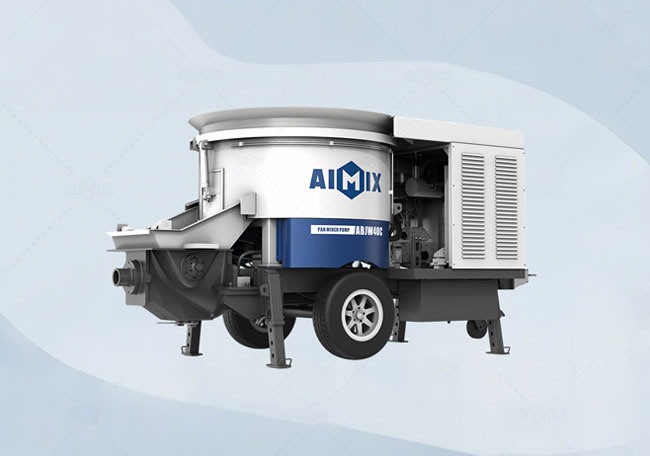
Deciphering Core Requirements: Project Scope and Material Logistics
The inaugural step in any acquisition is a dispassionate audit of project demands. This requires quantifying the average and peak concrete volume required per pour, as well as the project’s total duration. A high-volume, long-duration project justifies a different capital outlay than a series of small, discrete jobs. Concomitantly, site topography is a non-negotiable determinant. The steep inclines prevalent in many Jamaican developments present a formidable challenge for material placement. A cement mixer for sale in Jamaica alone may suffice for slab work on level ground, but elevated pours or sites with restricted access instantly alter the calculus. The material conveyance dilemma becomes central: when does manual handling become a bottleneck that a pump must solve?
This leads to a critical evaluation of Jamaican site realities. Urban constriction in Kingston or Montego Bay often prohibits the footprint of large truck-mounted pumps. Narrow roads, overhead obstructions, and limited staging areas necessitate compact, maneuverable equipment. Conversely, rural projects may grapple with unreliable grid power, making diesel-powered autonomy a paramount feature. Furthermore, the aggregate quality and mix designs commonly used locally can influence equipment choice; some pump models are more tolerant of certain aggregate gradations or mix consistencies than others. The machinery must be selected as an integrated component of the site’s specific logistical puzzle.
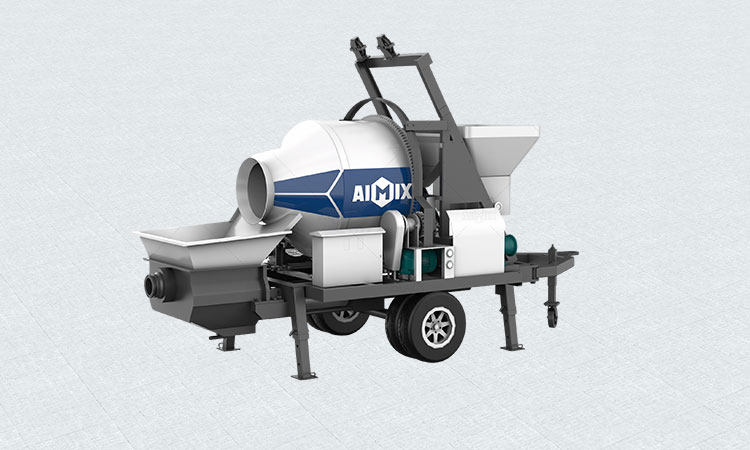
Machinery Archetypes: A Technical Dissection of Available Solutions
With requirements defined, the analysis turns to the equipment spectrum. Mixers are not a monolithic category. Portable drum mixers offer flexibility for small batches but lack consistency for structural work. Pan mixers, or forced-action mixers, provide a superior, homogeneous mix for stiffer concretes and are often integral to stationary batching setups. For pumping apparatus, three primary classifications exist. Trailer-mounted concrete pumps offer a middle ground of mobility and reasonable output, suitable for many residential and mid-scale commercial projects. Stationary pumps, often used with a separate placing boom, provide high pressure and reliability for large-scale industrial work or high-rise construction.
The most potent, yet most logistically complex, option is the truck-mounted concrete boom pump for sale. Its value proposition hinges on simultaneous mobility and precise placement. The choice between these archetypes hinges on a power source imperative. In Jamaica, where job site power can be inconsistent, the robust dependability of a diesel engine is frequently the default recommendation for primary equipment. However, for auxiliary machinery or operations in strictly regulated urban zones, electric-powered options warrant consideration for their lower decibel output and absence of exhaust emissions.
The Total Cost of Ownership: An Analytical Framework for Acquisition
The purchase invoice is merely the first entry in a long ledger. A sophisticated buyer employs a total cost of ownership (TCO) model. This begins with understanding depreciation curves and projected residual value for different brands and models in the local market. Some manufacturers’ equipment commands a higher resale value due to perceived durability and brand recognition, effectively lowering the net cost over the asset’s life. The operational calculus is more dynamic, encompassing not only fuel or power consumption but also the predictable and catastrophic costs of maintenance. Here, the parts procurement pipeline is a critical vulnerability.
Equipment that relies on exotic, imported parts with long lead times introduces severe project risk. Preference should be given to manufacturers with established, well-stocked dealer networks and service depots in Jamaica. The availability of genuine filters, wear parts, and hydraulic components locally is a form of insurance. Finally, the human element is paramount. The complexity of operating and maintaining a modern concrete pump in Jamaica demands skilled personnel. Investing in a machine whose sophistication outstrips local operator expertise is futile. The vitality of the service ecosystem—the availability of trained technicians—is as important as the machine’s specifications. The optimal choice balances technical capability with support infrastructure, ensuring the asset remains a productive tool rather than becoming a stagnant liability.